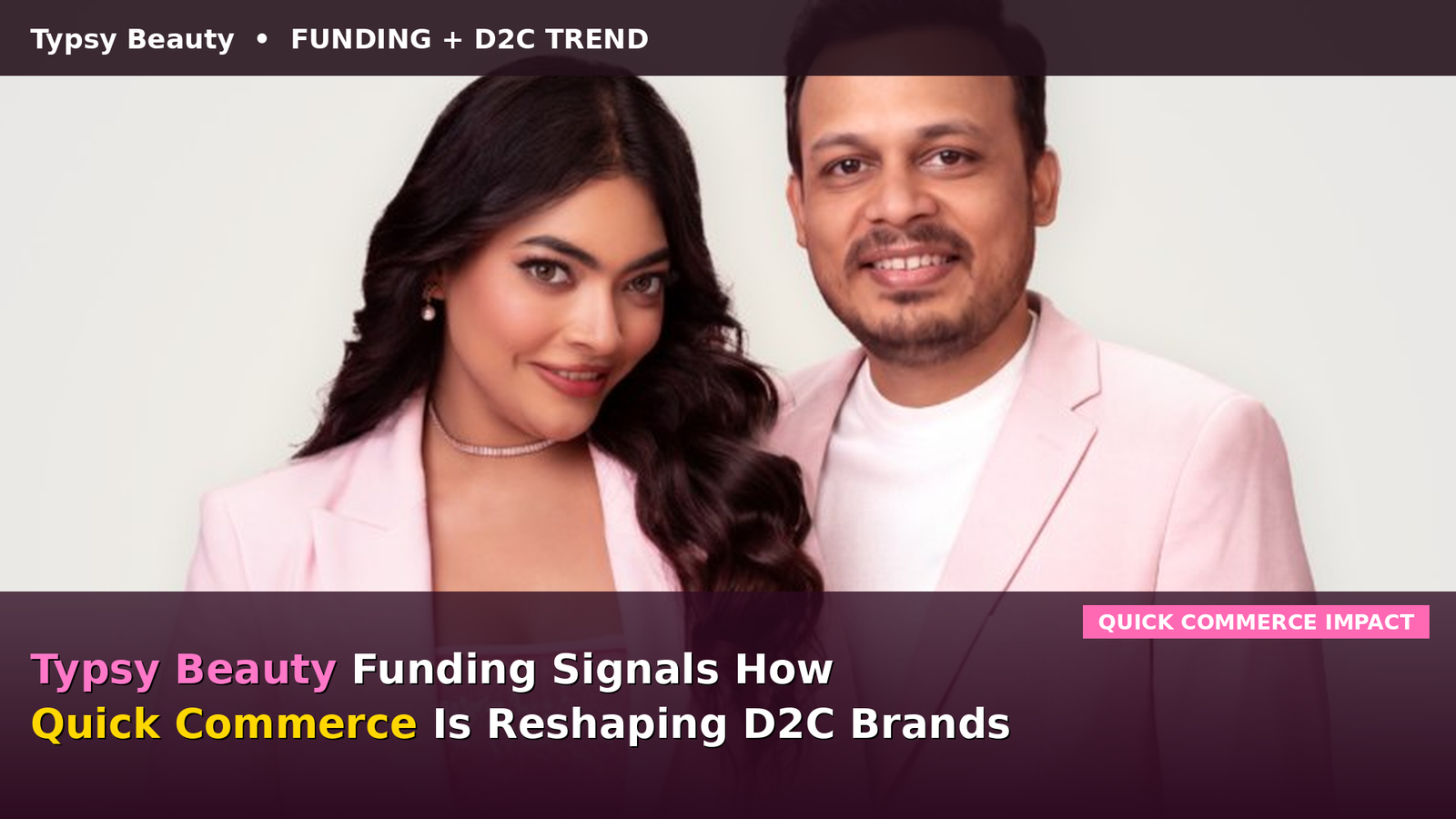
India’s Direct-to-Consumer (D2C) sector is undergoing another transformation. Typsy Beauty, a fast-growing beauty and personal care brand, has raised ₹20 crore in a funding round led by Saama Capital, with participation from several prominent family offices. Instead of investing only in product development or marketing, the company plans to use a significant portion of the capital to strengthen its presence on quick-commerce platforms such as Zepto and Blinkit.
The strategy reflects a major shift in consumer retail. For many modern D2C brands, success increasingly depends on being available for delivery within minutes rather than days.
Why Typsy Beauty Is Betting on Quick Commerce
Consumer shopping habits have changed dramatically over the last few years.
Customers now expect everyday products, including cosmetics and skincare, to arrive almost instantly. Beauty brands that were once focused on traditional retail stores and conventional e-commerce are now prioritizing quick-commerce platforms to stay competitive.
By expanding on Zepto and Blinkit, Typsy Beauty hopes to:
- Reach more customers
- Increase repeat purchases
- Improve product visibility
- Reduce delivery times
- Capture impulse buying opportunities
Fast delivery is becoming an important competitive advantage in the beauty industry.
Quick Commerce Is Becoming the New Retail Shelf
Earlier, D2C brands relied primarily on:
- Company websites
- Online marketplaces
- Shopping malls
- Multi-brand retail stores
Today, quick-commerce apps are emerging as a new digital storefront where consumers discover and purchase products.
For many shoppers, platforms like Zepto and Blinkit are becoming the first destination for buying:
- Skincare products
- Cosmetics
- Personal care essentials
- Hair care products
- Wellness items
This shift is changing how brands plan inventory, marketing, and product launches.
Why D2C Brands Depend on 10-Minute Delivery
Quick commerce offers several advantages that traditional e-commerce often cannot match.
These include:
- Faster customer satisfaction
- Higher purchase frequency
- Better convenience
- Stronger brand visibility
- More impulse purchases
- Lower waiting time
In categories like beauty and personal care, immediate availability can significantly influence buying decisions.
The Economics Behind Quick Commerce
Although ultra-fast delivery requires significant logistics investment, it also creates new growth opportunities.
Brands benefit through:
- Increased order volumes
- Better customer retention
- Higher repeat purchase rates
- Faster inventory movement
- Greater market penetration in urban areas
For startups, being visible on leading quick-commerce platforms can sometimes be as important as securing shelf space in physical retail stores.
Investors Are Following Consumer Behavior
The ₹20 crore funding round demonstrates how investors are responding to changing shopping patterns.
Rather than focusing only on marketing spend, investors increasingly support companies that strengthen their:
- Distribution channels
- Digital commerce strategy
- Logistics partnerships
- Customer acquisition efficiency
A strong quick-commerce presence is now viewed as an important growth driver for consumer brands.
Challenges of Relying on Quick Commerce
While quick commerce offers rapid growth, it also creates new challenges.
Brands must manage:
- Platform commissions
- Inventory planning
- Price competition
- Supply chain efficiency
- Product availability across multiple cities
Overdependence on a small number of delivery platforms may also reduce bargaining power over time.
For sustainable growth, many D2C companies continue to balance quick commerce with their own websites, marketplaces, and offline retail channels.
What This Means for India’s D2C Ecosystem
The latest funding round highlights a broader trend in Indian retail.
The competition is no longer just about offering quality products. It is increasingly about delivering them faster than competitors.
As quick commerce expands into more categories, brands that successfully integrate with these platforms may gain a significant advantage in customer acquisition and retention.
Final Thoughts
The Typsy Beauty funding round illustrates how India’s D2C sector is evolving alongside the rapid rise of quick commerce. By investing in stronger partnerships with platforms like Zepto and Blinkit, the company is aligning itself with changing consumer expectations for speed and convenience.
As 10-minute delivery becomes a standard feature of urban shopping, quick-commerce integration is likely to become a core business strategy rather than an optional sales channel. For many D2C brands, the future of growth may depend as much on delivery speed as on product quality.
FAQ
Why did Typsy Beauty raise ₹20 crore?
The company raised funding to accelerate growth, with a significant focus on expanding its presence across quick-commerce platforms like Zepto and Blinkit.
Why are D2C brands focusing on quick commerce?
Quick commerce offers faster deliveries, better customer convenience, higher repeat purchases, and improved product visibility.
How is quick commerce changing the beauty industry?
Consumers increasingly expect skincare and beauty products to be delivered within minutes, making fast delivery an important competitive advantage.
Does quick commerce replace traditional retail?
Not entirely. Most D2C brands continue to use multiple channels, including their own websites, online marketplaces, offline stores, and quick-commerce platforms.
Why are investors interested in quick-commerce-focused brands?
Strong quick-commerce partnerships can improve customer acquisition, increase sales frequency, and support faster business scaling, making these brands more attractive to investors.