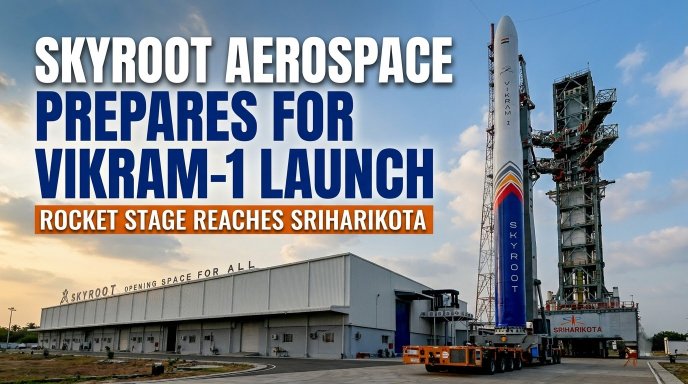
Skyroot Aerospace Prepares for Vikram-1 Launch: Rocket Stage Reaches Sriharikota
Skyroot Aerospace Vikram-1 preparations have entered an important phase as the Indian private space startup moves closer to the first orbital launch of its Vikram-1 rocket.
The company’s first stage of the launch vehicle has successfully reached the Sriharikota spaceport, where it will undergo integration and further preparations ahead of the planned mission.
The development marks another important step for India’s growing private space industry and highlights the increasing role of homegrown startups in the country’s space ambitions.
Vikram-1 Reaches a Major Milestone
The arrival of the first stage at Sriharikota is an important milestone in the Skyroot Aerospace Vikram-1 mission.
A rocket is assembled and tested through multiple stages before it can be cleared for launch. Transporting a major stage to the launch site means the vehicle is progressing from development and testing towards final integration.
At Sriharikota, the stage will be integrated with other parts of the launch vehicle as the company prepares for its orbital mission.
The process will involve detailed checks and coordination before the rocket can eventually move towards launch operations.
What Is the Vikram-1 Rocket?
Vikram-1 is an orbital launch vehicle being developed by Skyroot Aerospace.
The rocket is part of the company’s broader effort to provide commercial launch services and contribute to the development of India’s private space ecosystem.
Unlike suborbital missions, an orbital launch is designed to place a payload into orbit around Earth. This makes the Vikram-1 mission particularly important for Skyroot as it represents a major step towards becoming an operational launch provider.
Why Is Sriharikota Important?
Sriharikota is India’s primary spaceport and has hosted numerous satellite launches over the years.
The launch site provides the infrastructure required for preparing and launching orbital vehicles.
For a private Indian space company, bringing a rocket stage to Sriharikota is therefore a significant operational milestone.
It also reflects the growing integration between India’s established space infrastructure and its emerging private space sector.
Skyroot Aerospace and India’s Private Space Industry
Skyroot Aerospace is among the Indian startups working to build commercial space-launch capabilities.
The company was founded with the goal of developing launch vehicles that can serve the growing global demand for satellite launches.
India’s space sector has seen increasing participation from private companies in recent years, with startups working on rockets, satellites, propulsion systems and other space technologies.
The development of Vikram-1 is part of this broader transformation.
Why the Vikram-1 Mission Matters
The first orbital mission will be an important test of Skyroot’s technology and operational capabilities.
Successfully placing a payload into orbit would demonstrate that the company has moved beyond rocket development and testing into actual orbital launch operations.
Such a milestone could potentially open the door to future commercial missions and strengthen India’s position in the global private launch market.
It would also provide valuable experience for Skyroot as it develops and operates future launch vehicles.
From Rocket Development to Launch Preparation
Developing an orbital rocket involves much more than designing and manufacturing the vehicle.
Teams must conduct testing, validate propulsion systems, transport rocket stages, integrate the vehicle and complete extensive safety and mission checks.
The movement of the Vikram-1 first stage to Sriharikota indicates that Skyroot has entered a more advanced stage of this process.
The upcoming integration work will be an important part of preparing the rocket for its eventual launch campaign.
India’s Private Space Sector Continues to Grow
The progress of Skyroot Aerospace comes at a time when India’s private space ecosystem is expanding rapidly.
Startups are increasingly developing technologies that were once largely associated with government-led space programmes.
This growth is being supported by greater private-sector participation and increasing demand for commercial satellite services.
Companies like Skyroot are looking to take advantage of the growing global market for small satellite launches and dedicated launch services.
What Happens Next?
The next major step will be the integration of the Vikram-1 rocket at Sriharikota.
Following integration, the vehicle will need to undergo further checks and preparations before the launch campaign can proceed.
The exact launch timeline will depend on the completion of these technical and operational activities.
For Skyroot, every stage leading up to the mission will be closely watched because the Vikram-1 launch represents one of the company’s biggest milestones since its founding.
A Big Moment for Indian Space Startups
The progress of Skyroot Aerospace Vikram-1 is more than just another rocket-development milestone. It reflects the growing ambition of Indian private companies to participate directly in orbital space missions.
If the mission progresses successfully, it could strengthen confidence in India’s emerging commercial space sector and create new opportunities for future private launch ventures.
For now, the arrival of Vikram-1’s first stage at Sriharikota marks an important step towards Skyroot Aerospace’s first orbital launch.
Frequently Asked Questions (FAQs)
1. What is Skyroot Aerospace Vikram-1?
Skyroot Aerospace Vikram-1 is an orbital launch vehicle being developed by Indian private space startup Skyroot Aerospace.
2. Where has the Vikram-1 first stage been transported?
The first stage of the rocket has been transported to the Sriharikota spaceport for integration and further launch preparations.
3. What is the Vikram-1 rocket designed to do?
Vikram-1 is being developed as an orbital launch vehicle, designed to carry payloads into orbit around Earth.
4. Why is the Vikram-1 launch important?
The mission would represent a major milestone for Skyroot Aerospace and India’s private space sector by demonstrating the company’s ability to conduct an orbital launch.
5. What happens after the rocket stage reaches Sriharikota?
The first stage will undergo integration with the other components of the launch vehicle, followed by additional checks and preparations required before launch.
6. Who developed Vikram-1?
Vikram-1 is being developed by Skyroot Aerospace, an Indian private space startup focused on launch vehicles and commercial space missions.
7. Why is Sriharikota important for India’s space programme?
Sriharikota is India’s primary spaceport and provides the infrastructure required for launching orbital missions.
8. Does the arrival of the first stage mean Vikram-1 is ready to launch?
Not necessarily. The arrival of a rocket stage is an important milestone, but integration, testing, safety checks and other launch preparations still need to be completed before the mission can take place.